
Every takeoff counted twice.
Send the bid set. Get every item counted twice.
Takeoffs for subcontractors bidding commercial work: window coverings, film, doors, Division 10, ceilings and flooring. A fixed fee by the page, back in 48 hours.
- Two independent counts. Every difference found and explained before you see a number.
- Every quantity sourced. Tied to the sheet, schedule row or dimension it came from.
- The scale checked. Against the sheet's own written dimensions, because title blocks lie.
- Nothing guessed. What the drawings don't show goes on a field-verify list or to the GC.
A HeadRail company. Proven first on commercial shade bids for blinds dealers.
CS-02Trades
Seven trades, one method.
Each trade is counted the way that trade prices it, with the spec section and the sheets behind every line.
Window coverings
Every roller, solar, blackout and motorized shade, blind and drapery opening, sized from the window schedule, with motors, switches, pockets and the openings not in scope.
Done by HeadRail, our sister companyWindow film
Each lite's daylight opening, not the frame size, grouped by film type, with the panes too small or too large for one sheet called out.
SF by film typeDoors and frames
The door schedule checked against every swing on the plan: type, size, rating, frame and hardware set for each opening, and every mismatch listed.
Each, by type and ratingOverhead doors
Coiling and sectional doors by opening size, operator, rating and wall, with power and controls noted for the electrical scope.
Each, by openingDivision 10 specialties
Toilet accessories, partitions, lockers, boards and extinguisher cabinets, counted room by room against the enlarged plans and elevations.
Each, by roomAcoustical ceilings
Area by tile and grid type from the reflected ceiling plan, room by room, with every ceiling height in one table and the missing ones flagged.
SF by type, heights listedFlooring and base
Area by finish from the finish schedule and plan hatch, to the door centerline and less casework; base less doors and casework; existing-to-remain rooms left out with the reason.
SF by finish, base LFAll seven trades, in detail. What we don't take off: pipe, conduit, wire and duct runs, sprinkler heads, concrete, steel, roofing, sitework and floor-prep quantities. We'd rather say no than send you a guess.
CS-03How we count
Two counts. Every difference explained.
The first count comes from the schedules and the drawings. The second comes from a different method: the plan tags, the linework or the plan's own geometry. Where they disagree, you see why.
- Sources on every line. Schedule first, then a written dimension, then the scaled drawing, and each line says which.
- Specs read for quantity. Attic stock, spare units, allowances, alternates and owner-furnished items come out of the spec book, page by page.
- Addenda compared sheet by sheet. What changed is boxed on the drawings and in the counts.
- Scope in writing. Inclusions, exclusions and what belongs to another trade, ready for your proposal.
- A marked-up set. Every counted item marked on the drawings, so your estimator can check us in minutes.
| Check | Count A | Count B | Result |
|---|---|---|---|
| Exterior windows | 16 | 16 | Match |
| Shades in scope | 14 | 14 | Match2 windows N.I.C., reason listed |
| Window 10 type | B | C | GC question 1Tag and legend disagree |
| Scale, sheet A-101 | 1/8″ | 1/8″ | Verified100′-0″ measures 100 feet |
| Sizes from schedule | A, B, C | A-601 | Applied |
| Office 102 floor | 174.5 SF | 174.5 SF | MatchBid at 163.2 SF: to the door centerline, cabinet out |
Burned by a takeoff service before?
Estimators who have outsourced quantities tell the same stories: a floor that never got counted, a takeoff that took as long to check as to do, and nobody answering for the miss. This is what we do about each one.
- Scope that goes missing
- Every item is counted twice by two different methods, such as the schedule against the plan tags, or the plans against the elevations. A floor left out of one count shows up as a difference, and every difference is explained before the takeoff goes out. Anything left out of scope is listed with the note that took it out.
- Checking it takes as long as doing it
- Every line names the sheet, schedule row or dimension it came from, and every counted item is marked on the drawings. Your estimator spot-checks the marked set and the quality-check page instead of recounting the job.
- Nobody stands behind the count
- We do, in writing. If a count, quantity or measurement of ours doesn't match the documents you sent, we correct it free, even after bid day. If we can't correct it in time to help, we refund that takeoff's fee. It's section 9 of the Takeoff Service Terms.
- Guesses that look like numbers
- A height or size the drawings don't give goes on the field-verify list or becomes a question for the GC, with the sheets we checked. We don't fill a gap to make a total look complete.
- Your pricing in someone else's hands
- You get quantities, sizes and scope, not prices. You price from your own costs and supplier quotes. Your drawings are used only for your takeoff, never shared, and deleted 30 days after the bid date.
- No way to judge it first
- Look through the sample package, then send a live bid. Your first takeoff is free for one trade on a set up to 20 pages, no card needed, so you see the work before you pay for any.
CS-04Sample package
See what you'll get.
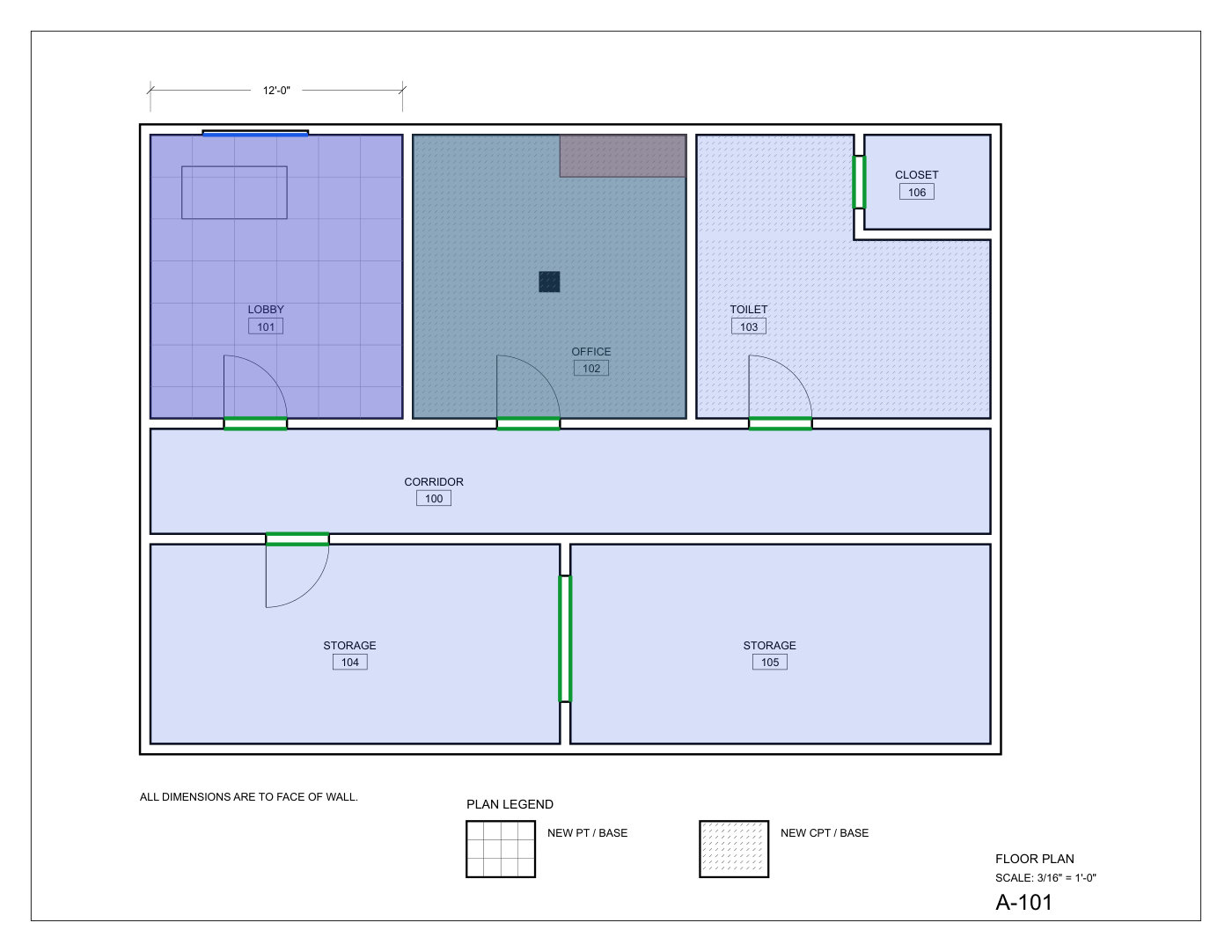
Real packages from made-up jobs: the report, the workbook and the marked sheets, the same files every takeoff comes with.


CS-05Pricing
A fixed fee per trade, by the page.
Priced by the pages we work from for each trade: the drawing sheets plus that trade's spec pages. We confirm the count and the fee by email with a secure pay link, and start when it's paid.
Your first takeoff is free: one trade, any set up to 20 pages, the full package, no card needed.
- Under 5 pages$139Per trade
- 5 to 10 pages$179Per trade
- 11 to 20 pages$229Per trade
- 21 to 30 pages$299Per trade
- 31 to 40 pages$379Per trade
- Over 40 pagesQuotedPriced when we see the set
Bidding every week? Take a plan.
- 3 takeoffs a month$399/mo$133.00 per takeoff
- Best fit for weekly bidders6 takeoffs a month$699/mo$116.50 per takeoff
- 12 takeoffs a month$1,299/mo$108.25 per takeoff
One takeoff is one trade up to 20 pages; a bigger one counts as 2. Unused takeoffs roll over 1 month. Extras are 20% off. No setup fee. Plans follow the Countersheet Takeoff Service Terms.
Every takeoff includes
- The report, the workbook, a CSV and the marked-up sheets
- Scope language to paste into your proposal
- Revisions free until bid day, and one addendum
- Any error of ours corrected free, even after bid day
- Answers from the estimator who did it: reply to the delivery email
CS-06Questions
What estimators ask first.
Something else? Ask on the request and we'll answer with the fee.
How fast is a takeoff?
48 hours from complete documents: the plans, the specifications and every addendum issued so far. Need it sooner? Say so on the request and we'll tell you if we can.
Can one request cover several trades?
Yes. Pick every trade on the request. Each trade is its own takeoff, priced by the pages we work from for it, and they all come back together.
What counts as a page?
Each drawing sheet we work from (plans, reflected ceiling plans, elevations, schedules, details) plus the spec pages for that trade. Sections for other trades don't count, even in the same file. We tell you the count and the fee before we start.
How accurate is it?
As accurate as the documents allow, and we show you where they fall short. Every item is counted twice and every quantity names its source. Drawings never match the building perfectly, so every takeoff ends with a field-verify list and questions for the GC instead of guesses.
What if a count is wrong?
Tell us. If a count, quantity or measurement of ours doesn't match the documents you sent, we correct it free, even after your bid date. If we can't correct it in time to be useful, we refund that takeoff's fee. That's section 9 of the Takeoff Service Terms.
Do you price the work?
No. You get quantities, sizes and scope, each tied to its sheet, and you price them from your own costs and supplier quotes. Your pricing stays yours, and your drawings are never shared with anyone.
Is the first takeoff really free?
Yes. Your business's first takeoff is free for one trade when the set is up to 20 pages: the full package, no card needed. Tick the box on the request.
How do I pay?
By card or bank payment on Stripe's secure checkout. For a single takeoff we email the page count and the fixed fee with a pay link, and start as soon as it's paid. Plans start right on this page, and a monthly plan cancels any time.
Do you visit the site?
No. Quantities come from the plans, specs and addenda. Anything the documents don't show, like a missing ceiling height, is marked Field verify, never guessed.
What happens to my drawings?
They are used only for your takeoff and deleted 30 days after the bid date. We never share them or use them for anything else.
Do you check code compliance?
No. We count what the drawings and specs require. When something looks short of code, like a missing accessible stall or a rated door without a closer, it goes to the GC as a question.
Your next bid, counted twice, in 48 hours.
- Fixed fee from $139
- First takeoff free
- Revisions free until bid day